Planning to build a 50-bed hospital in India? Understanding the essential design elements, room requirements, and construction costs is crucial for creating a functional, compliant, and cost-effective healthcare facility. This comprehensive guide breaks down everything you need to know about hospital design and budgeting in the Indian context.
Understanding the 50-Bed Hospital Configuration
A 50-bed hospital represents a mid-sized healthcare facility that can serve a community of approximately 50,000 to 100,000 people. This configuration typically requires a built-up area of 40,000 to 60,000 square feet, depending on the services offered and design efficiency. The facility should balance comprehensive medical services with manageable operational costs.
Critical Design Elements for a 50-Bed Hospital
1. Strategic Zoning and Layout Planning
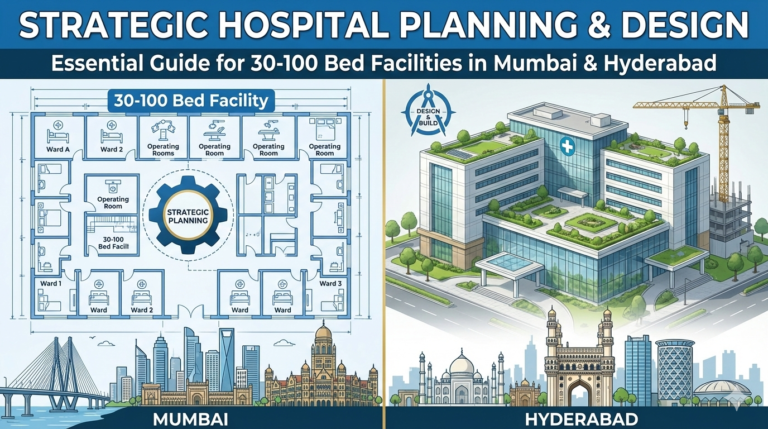
Effective zoning is the backbone of hospital design. The facility should be divided into distinct functional zones: public areas (OPD, reception, pharmacy), semi-public areas (diagnostic services, physiotherapy), restricted areas (operation theaters, ICU), and support services (kitchen, laundry, storage). Proper zoning minimizes cross-contamination, improves workflow efficiency, and enhances patient experience. The layout should follow a logical flow from outpatient services on lower floors to inpatient wards and critical care units on upper floors.
2. Infection Control and Hygiene Standards
Modern hospital design must prioritize infection prevention through strategic planning. This includes maintaining separate circulation paths for patients, staff, and materials, implementing proper ventilation systems with HEPA filters in critical areas, designing negative pressure rooms for isolation, and selecting antimicrobial surfaces for high-touch areas. The design should incorporate adequate hand-washing stations, proper waste segregation facilities, and sufficient buffer zones between clean and contaminated areas.
3. Compliance with Regulatory Standards
Indian hospitals must comply with multiple regulatory frameworks including Clinical Establishment Act guidelines, National Building Code of India requirements, fire safety norms, and NABH (National Accreditation Board for Hospitals) standards if accreditation is planned. Key compliance aspects include maintaining minimum ceiling heights of 10 feet for patient rooms and 12 feet for operation theaters, ensuring proper fire exits and evacuation routes, installing ramps and elevators for differently-abled access, and providing adequate natural light and ventilation in patient areas.
4. Patient-Centric Design Philosophy
Evidence-based design principles show that the physical environment significantly impacts patient recovery. Incorporate natural lighting wherever possible, as studies demonstrate its positive effects on healing. Design waiting areas that reduce patient anxiety through comfortable seating, entertainment options, and clear wayfinding signage. Ensure patient rooms have adequate space for family members and medical equipment. Privacy should be maintained through thoughtful room layouts and sound insulation. Color psychology can be applied using calming colors in patient areas and energizing colors in staff zones.
Essential Room Requirements for a 50-Bed Hospital
Core Medical Areas
The outpatient department should include 8 to 12 consultation rooms (120 to 150 sq ft each), a waiting area with seating for 60 to 80 patients, registration and billing counters, and a pharmacy counter. For inpatient facilities, plan for 40 general ward beds (potentially in 4-bedded rooms of 400 sq ft each), 6 to 8 private rooms (180 to 220 sq ft each), 4 ICU beds (200 sq ft per bed including equipment space), and adequate nursing stations and staff duty rooms.
Diagnostic and Treatment Facilities
A well-equipped laboratory covering 800 to 1,200 square feet with sections for pathology, biochemistry, and microbiology is essential. The radiology department should house an X-ray room (300 sq ft), ultrasound room (200 sq ft), and space for future CT/MRI equipment. Two operation theaters of 600 square feet each with scrub areas, sterile supply room, and recovery room are necessary. Additional facilities should include a physiotherapy unit (800 to 1,000 sq ft) and a minor procedure room.
Emergency and Support Services
The emergency department requires a dedicated entrance, triage area, 4 to 6 emergency beds with adequate space for equipment and rapid response, trauma bay for critical cases, and emergency operation theater access. Support services include a central sterile supply department (CSSD) of 600 to 800 square feet, dietary kitchen and pantry facilities, medical gas storage and distribution rooms, electrical substations and generator rooms, biomedical waste management area, staff changing rooms and rest areas, and administrative offices and meeting rooms.
Construction Cost Analysis in India
Basic Construction Package
A basic construction approach for a 50-bed hospital costs between ₹2,500 to ₹3,500 per square foot, resulting in a total investment of approximately ₹10 to 21 crores for a 40,000 to 60,000 sq ft facility. This package typically includes standard RCC frame structure with brick masonry, basic vitrified tiles and standard flooring, standard aluminum windows and doors, basic electrical wiring and fixtures, standard plumbing fixtures, basic HVAC system, standard ceiling and basic interior finishes, and essential fire safety equipment meeting minimum regulatory requirements.
Premium Construction Package
Premium hospital construction ranges from ₹4,500 to ₹7,000 per square foot, totaling ₹18 to 42 crores for the same facility size. This investment includes high-quality structural systems with earthquake resistance, premium imported tiles and specialized hospital-grade flooring, UPVC or imported aluminum windows with double glazing, high-quality doors with hospital-grade hardware, advanced electrical systems with hospital-grade wiring, sensor-based fixtures and premium lighting, copper plumbing with medical gas pipeline systems, centralized VRV/VRF HVAC systems with individual zone controls, designer false ceilings and premium wall finishes, comprehensive fire detection and suppression systems, advanced building management systems (BMS), and imported fixtures and fittings throughout.
Cost Impact of Key Design Choices
Several design decisions significantly impact the overall budget. Operation theater design varies considerably, with basic OTs costing ₹25 to 40 lakhs and modular OTs with laminar flow ranging from ₹60 lakhs to 1.5 crores per theater. ICU setup varies from ₹8 to 15 lakhs per bed for basic ICU setups to ₹25 to 50 lakhs per bed for advanced ICU with integrated monitoring. HVAC systems represent a major cost differential, with split AC units costing ₹300 to 500 per sq ft while centralized systems range from ₹800 to 1,500 per sq ft. Flooring choices span from standard vitrified tiles at ₹80 to 150 per sq ft to antibacterial vinyl flooring at ₹250 to 400 per sq ft or epoxy flooring at ₹180 to 350 per sq ft. Medical gas pipeline systems add ₹400 to 800 per sq ft to the overall cost.
Additional Cost Considerations
Land and Pre-Construction Costs
Beyond construction, factor in land acquisition costs that vary dramatically by location (₹2,000 to 50,000 per sq ft), architectural and engineering fees typically ranging from 4% to 8% of construction cost, soil testing and structural consultancy, and statutory approvals and clearances.
Medical Equipment Investment
Medical equipment represents a substantial additional investment. Basic equipment packages (patient beds, examination tables, basic diagnostic tools) cost ₹3 to 5 crores. Advanced equipment packages (digital X-ray, ultrasound, laboratory automation, advanced monitors) range from ₹8 to 15 crores.
Furniture and Interior Furnishing
Budget ₹600 to 1,200 per square foot for complete interior furnishing including patient room furniture, nursing stations, waiting area seating, staff furniture, signage and wayfinding systems, and curtains and soft furnishings.
Smart Cost Optimization Strategies
Phased Development Approach
Consider implementing your hospital project in phases. Start with essential services like OPD, basic diagnostic facilities, and 25 beds, then expand gradually as patient volume and revenue grow. This approach significantly reduces initial capital requirements while allowing you to test market response and refine your services.
Value Engineering
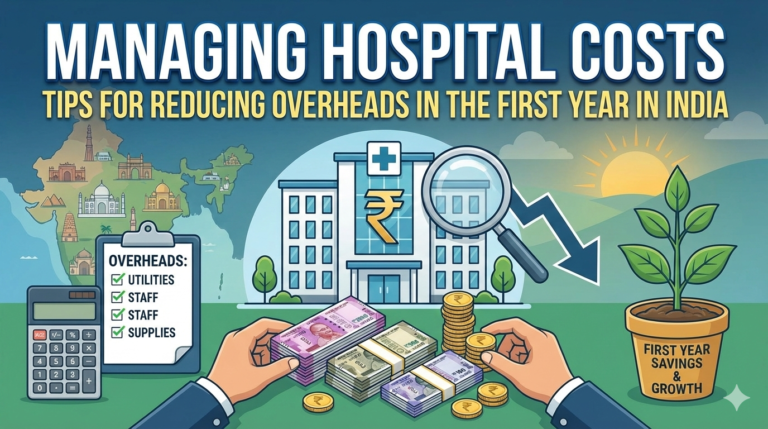
Work with experienced hospital consultants to identify areas where costs can be optimized without compromising quality or functionality. This might include using locally sourced materials that meet standards, standardizing room sizes and designs to reduce complexity, implementing efficient structural designs that minimize material usage, and selecting equipment that offers the best value for money rather than simply the cheapest or most expensive options.
Regional Cost Variations
Construction costs vary significantly across Indian regions. Metro cities like Mumbai, Delhi, and Bangalore see costs 30% to 50% higher than tier-2 cities. Tier-2 cities such as Pune, Jaipur, and Lucknow offer moderate costs with good contractor availability. Tier-3 cities and rural areas provide lowest construction costs but may face challenges in skilled labor and material availability.
Sustainability and Future-Proofing
Green Building Features
While initial costs may be 8% to 12% higher, sustainable design features offer long-term savings and improved patient outcomes. Consider rainwater harvesting systems, solar panels for hot water and partial electricity needs, energy-efficient HVAC and lighting systems, water-efficient fixtures and recycling systems, and natural ventilation and daylighting strategies. These investments typically achieve payback within 5 to 8 years through reduced operational costs.
Technology Integration
Design infrastructure to accommodate future technological upgrades. Include adequate cable management pathways and server rooms, provision for digital signage and information systems, space and power backup for future medical equipment, and structural capacity for rooftop equipment additions.
Expansion Capability
Plan your design with future growth in mind. Leave provision for vertical expansion (additional floors), ensure foundation design accommodates increased load, plan utility infrastructure with excess capacity, and maintain flexibility in interior layouts for service additions or modifications.
Selecting the Right Construction Approach
When to Choose Basic Construction
Basic construction is appropriate for budget-conscious projects in tier-2 or tier-3 cities, hospitals serving primarily economical patient segments, facilities where insurance empanelment isn’t a primary goal, or situations requiring rapid market entry with lower initial investment.
When Premium Construction is Justified
Premium construction makes sense for metro city locations with higher patient expectations, facilities targeting corporate tie-ups and insurance empanelment, hospitals planning NABH accreditation from inception, and situations where owner investment ability supports higher initial costs for better long-term returns.
Working with Professional Hospital Consultants
Engaging experienced hospital planning and design consultants can save significant costs through optimized space utilization, guidance on equipment selection and procurement, assistance with regulatory approvals and accreditation planning, value engineering recommendations, and project management expertise. While consultant fees typically range from 4% to 8% of the project cost, their expertise often results in savings that far exceed their fees while ensuring a more functional and compliant facility.
Timeline Expectations
Understanding realistic project timelines helps in financial planning and business projections. The planning and approval phase typically takes 4 to 6 months, construction for basic finish requires 12 to 18 months, while premium finish construction spans 18 to 24 months. Equipment procurement and installation adds 3 to 4 months, and staff recruitment and training takes 2 to 3 months. Overall, expect a total project timeline of 24 to 36 months from concept to operations.
Conclusion
Building a 50-bed hospital in India requires careful planning, realistic budgeting, and expert guidance. While costs can vary significantly based on location, design choices, and quality standards, a well-planned facility can be developed with an investment ranging from ₹15 to 60 crores including land, construction, equipment, and furnishing.
The key to success lies in clearly defining your target patient segment, creating a realistic phased development plan if necessary, working with experienced hospital consultants, maintaining focus on functionality alongside aesthetics, planning for future expansion and technology upgrades, and ensuring compliance with all regulatory requirements from day one.
Whether you choose basic or premium construction, prioritize thoughtful design that enhances patient experience, supports efficient clinical workflows, and creates a sustainable business model. Remember that a well-designed hospital isn’t necessarily the most expensive one, but rather one that best serves its community while maintaining operational viability.
For expert guidance on hospital planning, design, and construction in India, consider consulting with specialized healthcare facility consultants who can help optimize your investment while ensuring compliance and functionality. The right planning today will result in a successful healthcare facility that serves your community for decades to come.
Transform Your Vision Into a
World-Class Hospital.
Hoscraft has helped doctors and healthcare entrepreneurs across India plan, design and build their dream hospitals. Let us help you too.